Altitude's Influence on Scoring Dynamics and Its Implications for Basketball Wagering Accuracy
Jordan Hartmann · Oct 15, 2026
Altitude's Influence on Scoring Dynamics and Its Implications for Basketball Wagering Accuracy
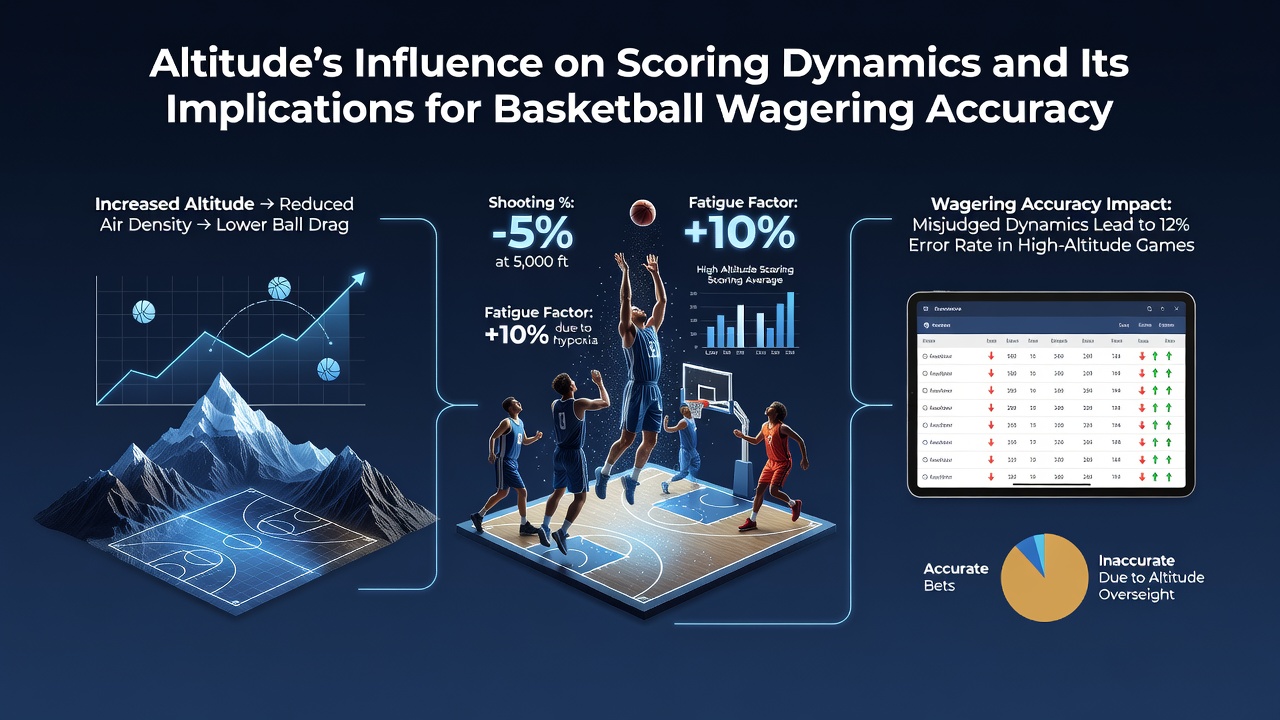
Altitude changes the way basketball unfolds on the court because thinner air reduces air resistance and alters how the ball travels through space while players adjust to lower oxygen levels during extended play. Venues like the one in Denver sit at roughly 5,280 feet above sea level and create measurable differences in scoring patterns compared with games held near sea level in cities such as Miami or Los Angeles. Data collected across multiple NBA seasons shows that teams playing at this elevation often post higher point totals and that the effect compounds when both teams face the same conditions for the first time in a road series.
Ball Flight and Aerodynamic Shifts at Elevation
Lower air density at altitude lets the basketball maintain velocity longer after release so shots from beyond the arc reach the rim with greater force and arc less sharply than they would at sea level. Researchers tracking release angles and shot outcomes have documented that three-point attempts convert at slightly higher rates in these environments while long two-point jumpers also benefit from the reduced drag. The same physics influences passes and dribbles because the ball covers distance faster and bounces higher on the hardwood when atmospheric pressure drops. Observers note that these changes appear consistently across regular-season schedules and that visiting teams require several quarters to recalibrate their shooting mechanics.
Player Physiology and Fatigue Patterns
Reduced oxygen availability forces athletes to increase breathing rates and heart output during high-intensity bursts so endurance suffers more quickly when games extend into the fourth quarter. Studies of heart-rate variability and blood-oxygen saturation reveal that players accumulate lactate faster at altitude and that recovery between possessions becomes less efficient. Teams that rotate deeper benches maintain scoring output longer whereas squads relying on star players for heavy minutes see production taper in the final periods. Conditioning programs adapted for high-elevation training camps mitigate some of these effects yet the advantage remains pronounced for home squads that practice daily at the venue.
Statistical Trends Across NBA Seasons
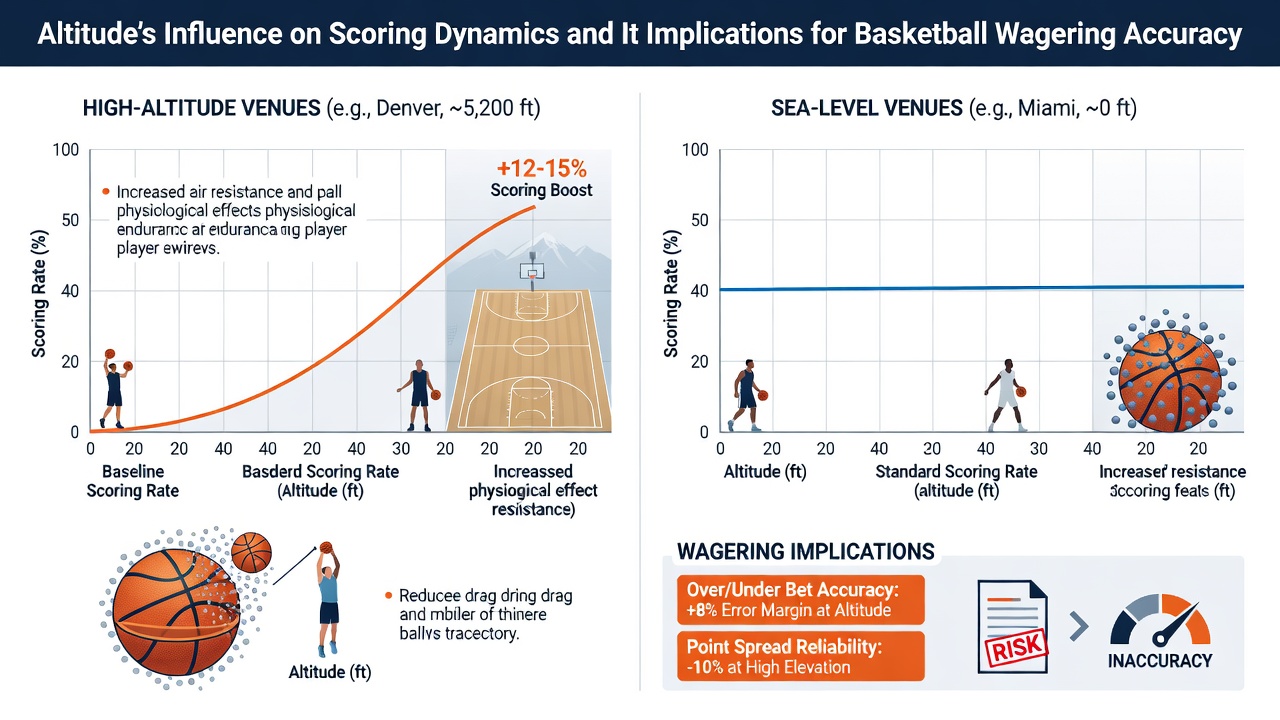
League-wide data aggregated from the past decade indicates that games hosted in Denver average approximately six to eight more combined points than the league mean for contests at lower elevations. Home teams in these settings convert field goals at rates roughly two percentage points above their season averages while opponents experience a corresponding dip in defensive efficiency. Turnovers also rise modestly because passes travel farther than anticipated and timing between teammates erodes under fatigue. These patterns hold steady when examined across both regular-season and playoff matchups although the magnitude varies with roster construction and recent travel schedules.
Adjustments in Wagering Markets and Model Accuracy
Oddsmakers incorporate elevation data into total-point lines so that Denver contests typically open with higher over-under thresholds than comparable matchups at sea level. Models that ignore altitude variables consistently underestimate scoring and produce larger deviations when both teams enter the arena after sea-level schedules. Historical results show that betting markets adjust within the first few weeks of each season once early results establish new baselines yet residual inefficiencies persist when injuries or schedule quirks alter rotation patterns. Advanced analytics platforms now integrate barometric pressure readings alongside traditional box-score inputs to refine projections and narrow the gap between predicted and actual totals.
October 2026 marks the opening of the 2026-27 NBA campaign and early schedule releases already flag multiple high-altitude dates that carry elevated totals in pre-season betting windows. Regulatory filings from state gaming commissions in Colorado and Nevada confirm that sportsbooks track these variables closely when setting limits and that volume on over bets rises measurably for Denver home games. External sources such as NBA advanced statistics dashboards provide granular tracking data that feeds these models while research summaries from institutions including the Australian Institute of Sport offer comparative studies on endurance responses across elevations in various team sports.
Conclusion
Altitude introduces measurable aerodynamic and physiological variables that elevate scoring in basketball contests and require explicit inclusion in predictive models used for wagering decisions. Data from multiple seasons demonstrates consistent patterns in point totals, shooting percentages, and fatigue curves that differ from sea-level baselines. Markets that embed these factors achieve tighter alignment between projected and realized outcomes whereas those that overlook elevation continue to post larger errors. Ongoing collection of biometric and environmental data promises further refinement of these assessments as teams and betting platforms incorporate real-time conditions into their evaluations.